
In Diaspora: Korean Artists in 1970s New York
The 1970s marked a pivotal moment in the history of Korean artists working in New York. As the city emerged as the center of the international contemporary art world, artists arriving from Korea encountered new artistic movements, including Abstract Expressionism, Minimalism, Conceptual Art, and post-studio practices. Living between cultures, they navigated questions of identity, memory, and belonging while adapting to an unfamiliar social and artistic environment. Rather than choosing between Korean traditions and Western modernism, these artists forged distinctive visual languages that reflected both their cultural heritage and their experiences of migration.
This exhibition brings together six influential artists—Myong Hi Kim, Po Kim, Tchah Sup Kim, Woong Kim, Il Lee, and Choong Sup Lim—whose practices reveal the diverse ways Korean artists contributed to New York’s dynamic artistic landscape. Working across painting, drawing, sculpture, assemblage, and installation, they transformed the experience of diaspora into a catalyst for experimentation and innovation. Their works engage themes of memory, spirituality, labor, materiality, and cultural translation, demonstrating how artistic expression can emerge from the tensions and possibilities of living between worlds.
Myong Hi Kim addresses migration and memory through layered drawings on reclaimed blackboards, surfaces marked by erasure and renewal that serve as metaphors for displacement and cultural inheritance. Po Kim fused the gestural energy of Abstract Expressionism with the rhythmic sensibility of East Asian calligraphy, creating paintings that balance emotional intensity with meditative reflection.
Tchah Sup Kim developed a distinctive visual language that merged abstraction with symbolic imagery. Drawing from Eastern philosophy, mythology, and personal reflection, his paintings explore themes of transformation, spirituality, and cultural exchange. Woong Kim created contemplative works through repeated layers of oil paint and mixed media, producing subtle textures and tonal variations that emphasize duration, restraint, and lived experience.
Il Lee developed a distinctive abstract language through the accumulation of countless ballpoint pen marks, transforming an everyday writing instrument into a powerful tool for exploring time, movement, and process. His densely layered abstractions create immersive fields of depth and energy, while his later acrylic and oil paintings continue this exploration of line, form, and space through a process-driven approach grounded in experimentation and material sensitivity.
Choong Sup Lim developed an innovative practice that combines painting, sculpture, and installation through stretched fabric, thread, wood, and constructed forms. Built through processes of repetition and accumulation, his works transform simple materials into dynamic spatial structures that evoke memory, labor, and cultural transition.
Together, these artists represent an important chapter in the history of Korean art in America. Their works reveal how migration became a source of creative transformation, generating new forms of abstraction and material exploration while expanding the language of contemporary art. Through their diverse practices, they offer enduring reflections on identity, memory, and belonging, demonstrating how artistic innovation emerges through movement, adaptation, and cultural exchange.
Il Lee (b. 1952)
Upon relocating to New York in the 1970s, Il Lee bypassed the traditional paintbrush in favor of a more utilitarian tool: the ballpoint pen. This choice was not merely a matter of convenience but a radical shift in the registration of time and the body. While his practice shares the repetitive, meditative sensibility of Dansaekhwa (the Korean monochrome movement that prioritized process and labor over emotional expression), Lee’s work evolved within the specific gravitational pull of American Minimalism and conceptual restraint.
Lee’s large-scale abstract compositions are immersive fields built from an extensive accumulation of ink. These are not static images but records of lived experience. His process involves sweeping, rhythmic gestures that balance explosive energy with disciplined control. By layering innumerable lines, he creates a dense, sensory depth that fluctuates between motion and stillness. The ballpoint pen allows Lee to capture the nuances of pressure and direction, producing painterly textures and tonal shifts that evoke a sense of mass and atmosphere.
Recent acrylic and oil paintings extend these investigations into a new medium, exploring line, form, positive and negative space, and the relationship between what is rendered and what remains implied. Together with his ballpoint pen works, they reveal a practice defined by sustained experimentation, material sensitivity, and a commitment to process.
In the context of the New York diaspora, Lee’s work represents a sophisticated bridge. He translates the spiritual discipline of Korean tradition into a contemporary dialogue with Western abstraction. His surfaces function as a performance of labor, where the ordinary act of mark-making is elevated to a ritual. Through relentless repetition, Lee transforms a common writing instrument into a vehicle for profound inquiry, inviting viewers into a space of sustained attention and quiet intensity.
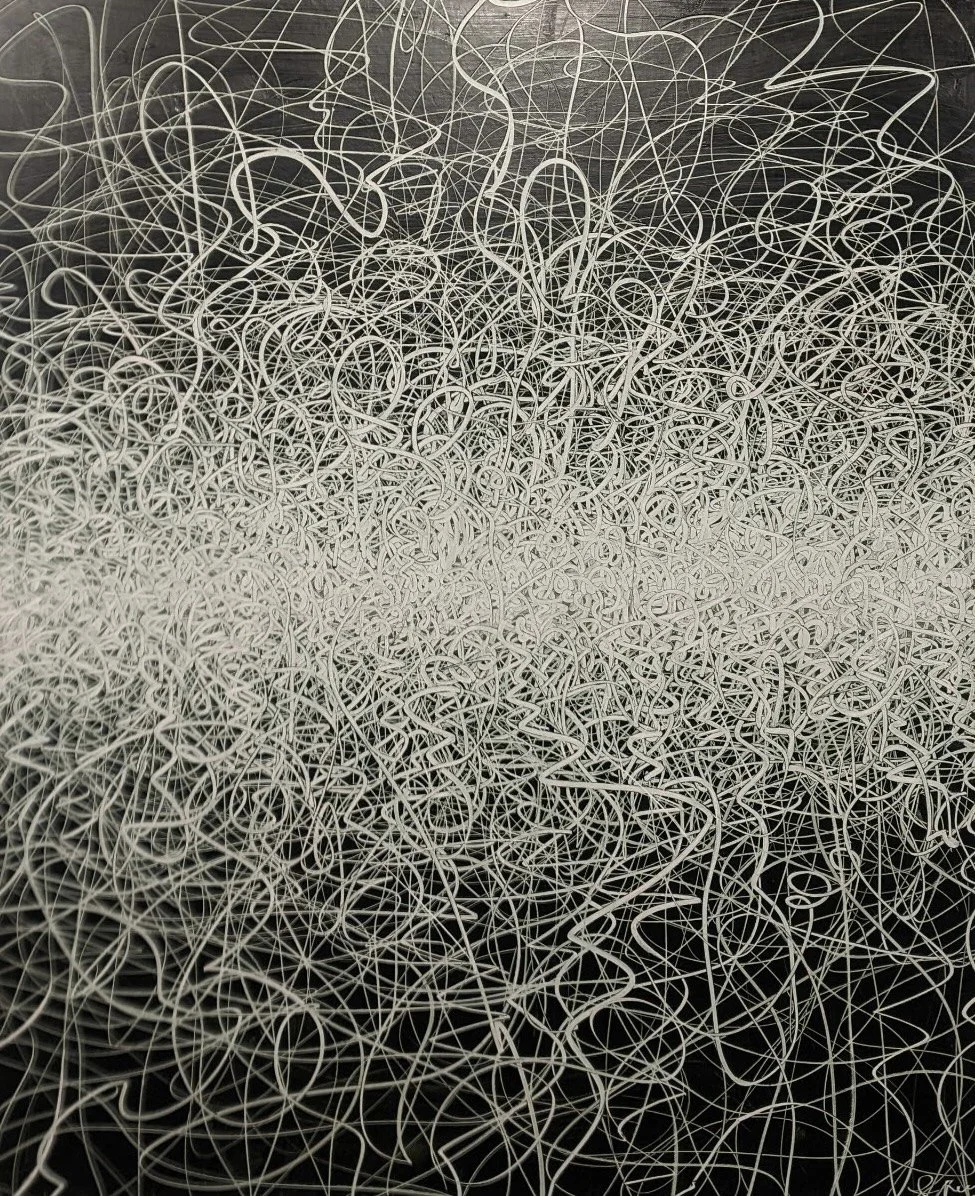
Il Lee, TW - 2502, 2025, oil and acrylic on canvas, 32 x 27 inches
Tchah Sup Kim (b. 1940)
Tchah Sup Kim's artistic practice brings together scientific inquiry, historical consciousness, and cultural memory. His early work emerged from the geometric and experimental tendencies of Korea's postwar avant-garde, emphasizing structure, abstraction, and conceptual investigation. After relocating to New York in the 1970s, his practice expanded to incorporate questions of identity, history, and cultural origins. By the 1990s, he had developed a distinctive visual language that combined formal rigor with personal and historical reflection.
While studying and working in the United States, Kim initially pursued the artistic and intellectual traditions associated with Western modernism. Yet distance from Korea deepened his engagement with his own cultural heritage and historical roots. His experiences abroad prompted an ongoing examination of Korean identity within broader global histories, leading him to investigate themes of migration, geography, civilization, and cultural memory.
During the 1980s, Kim increasingly turned toward expressive and autobiographical imagery. Following his return to Korea in the 1990s, he shifted away from large-scale works toward more intimate drawings and paintings. These works draw upon personal experience, historical inquiry, and reflections on place, often incorporating maps, symbolic forms, and references to Korean history. Rejecting rigid formal systems in favor of a distinctive freehand approach, Kim fused individual memory with broader cultural narratives, creating a body of work that explores the relationship between self, history, and identity.
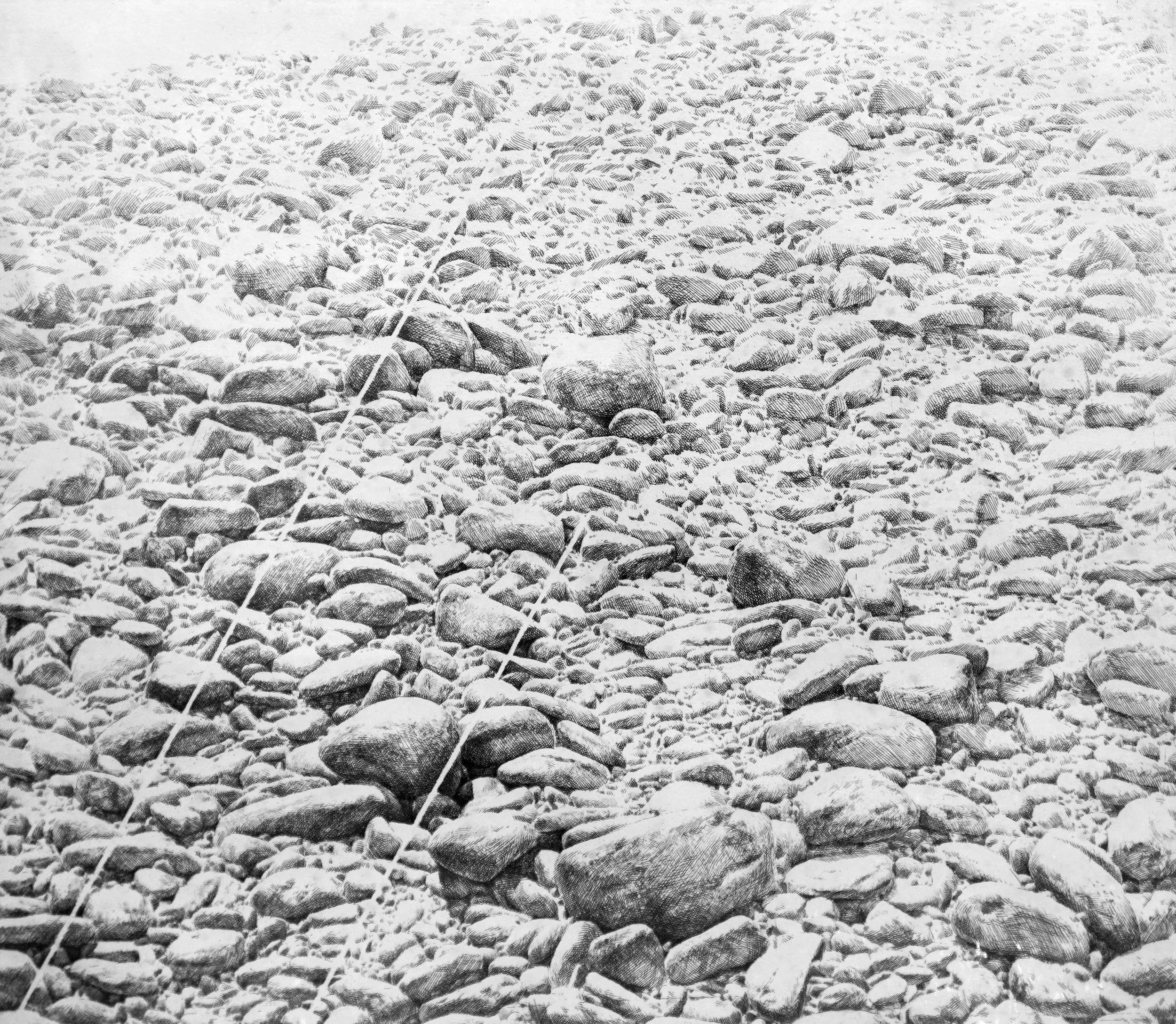
Tchah Sup Kim, Between Infinities (Two Lines), 1978, Copper plate etching, 22 x 25 inches
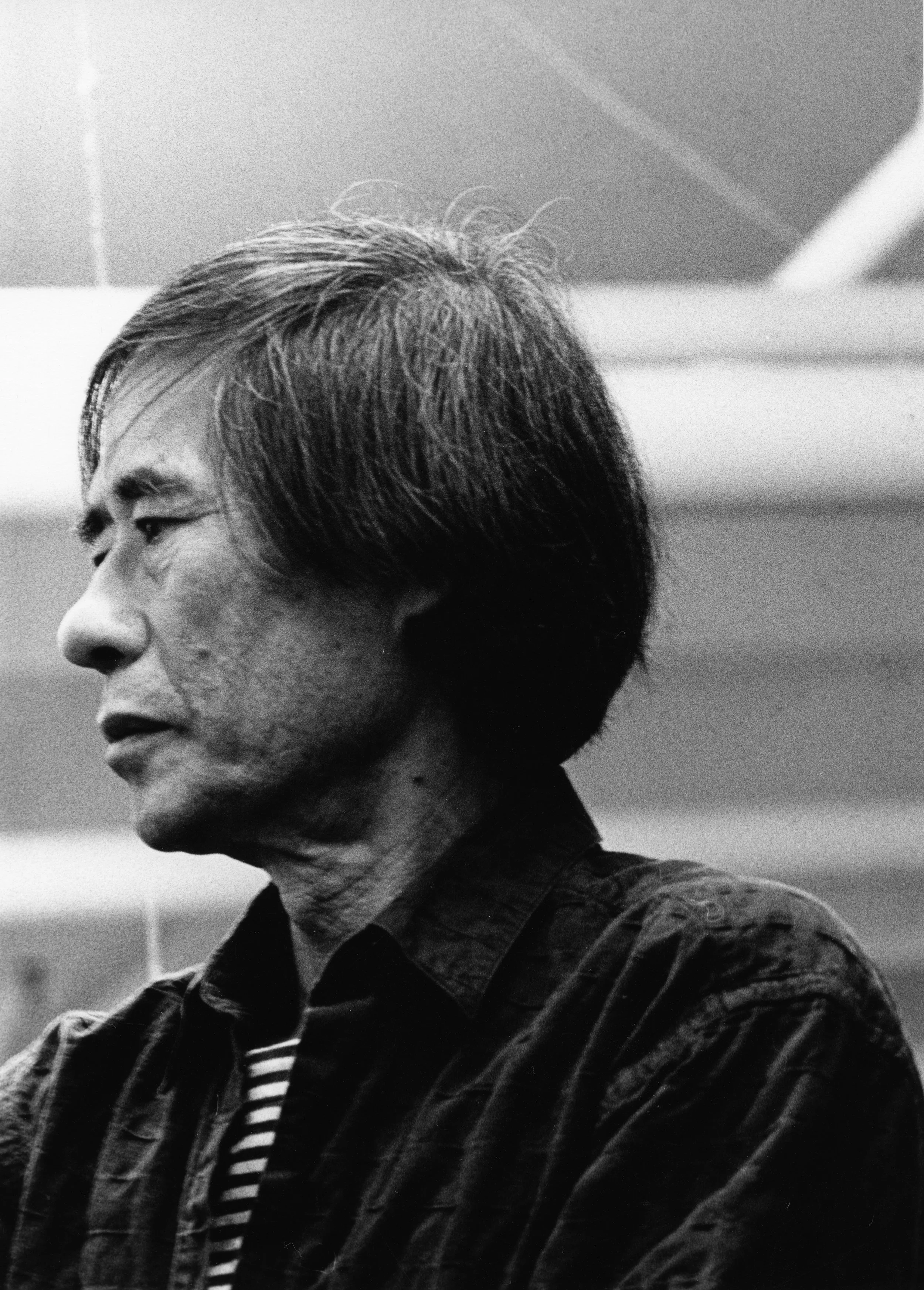
Po Kim (b. 1917)
Po Kim stands as a foundational figure among the first generation of Korean abstract painters. His relocation to New York in 1955 represented a radical break from the restrained hierarchies of traditional Korean painting. Having lived through the extreme political turmoil of postwar Korea, Kim found in the New York avant-garde a profound sense of personal and creative liberation. He was deeply drawn to the immediacy of Abstract Expressionism, particularly the work of Willem de Kooning, which provided a means of processing the trauma and fragile hope that shaped his earlier life.
During the late 1950s and 1960s, Kim developed a visual language of striking intensity. He fused the spontaneous and sensuous color of Western abstraction with the dynamic, rhythmic brushwork of East Asian calligraphy. His work from this period moved between vigorous gestures and meditative interiority, often resisting the rigid formalist trends of the American art scene. By integrating calligraphic elements into his paintings, Kim forged a distinctive artistic identity that balanced the expressive freedom of abstraction with a deep connection to his cultural heritage.
The 1970s marked a surprising shift for Kim as he turned toward observational drawing. He began to view the act of seeing as a contemplative practice, using colored pencils to render everyday objects with extraordinary attention and sensitivity. This period of quiet focus eventually evolved into large-scale figurative and allegorical paintings in the following decades. Throughout his long career, Kim bridged the gap between East and West, creating a body of work that functioned as a site of self-reflection and historical inquiry. His art remains a testament to the power of gesture as a means of survival, discovery, and transformation.
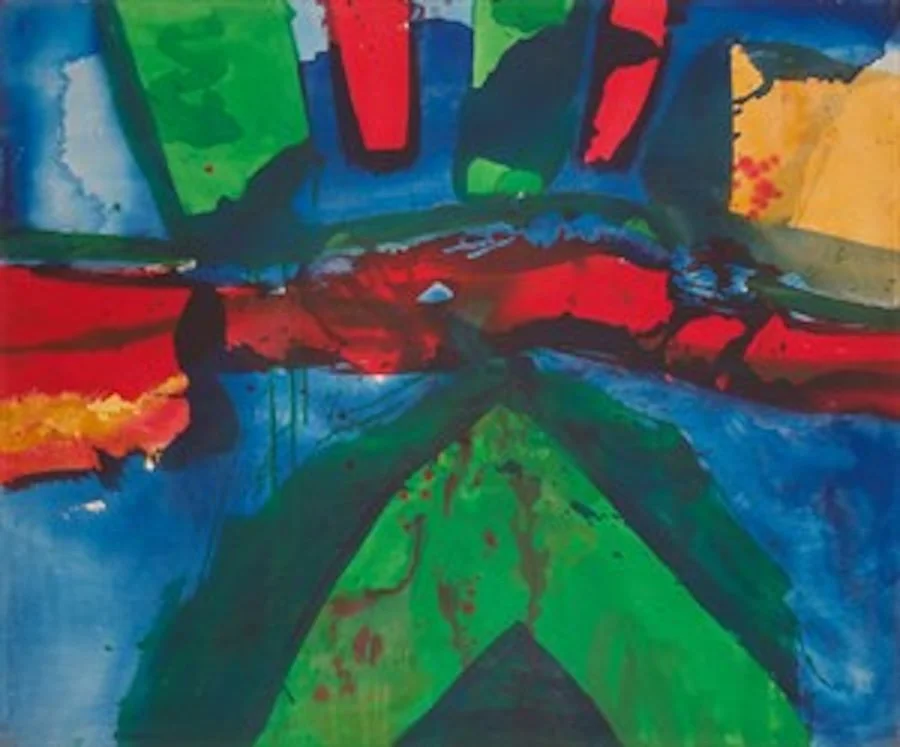
Po Kim, Together and Apart, 1970, Acrylic on canvas, 60 x 72 inches
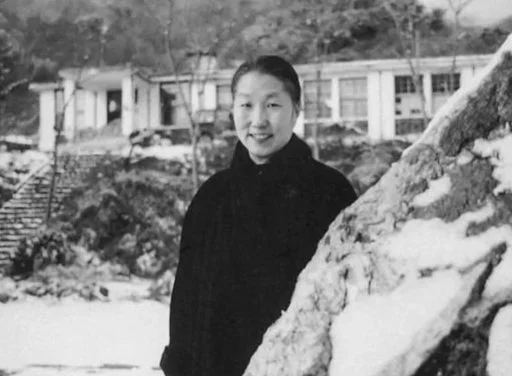
Myong Hi Kim (b. 1949)
Myong Hi Kim’s work engages cultural memory shaped by migration and displacement, drawing on the condition of Koreans as “modern nomads.” Her practice reflects both voluntary and forced movement, informed by her movement between Korea and New York and extensive international travel. These experiences underpin an engagement with historical rupture and the lingering effects of dislocation.
Since relocating in 1990 to an abandoned schoolhouse in rural northern South Korea, Kim has become attentive to the traces of those who once occupied the space. The discovery of the building’s original chalkboards became a pivotal moment in her practice. Once tools of instruction, these surfaces now function as both support and archive, carrying residual marks of erasure—half-visible Korean inscriptions and mathematical notations that evoke lessons repeatedly written and wiped away. The chalkboard becomes a site where histories are recorded and undone, underscoring the fragility of memory.
Using oil pastel and chalk on these found blackboards, Kim allows figures and forms to emerge from deep black surfaces like apparitions. Often recalling children who once studied in the schoolhouse, these images evoke suspended time, where past and present coexist. The materiality of the chalkboard reinforces this temporal instability, situating the work within a negotiation between disappearance and return.
Through contrasts of light and shadow, Kim constructs compositions that merge memory and myth, personal experience and collective history. Her landscapes and figures occupy a suspended space where past and present continually intersect. While the works acknowledge displacement and historical trauma, they also register resilience. Ultimately, Kim’s practice suggests that dislocation does not preclude the possibility of renewal or reimagined continuity.
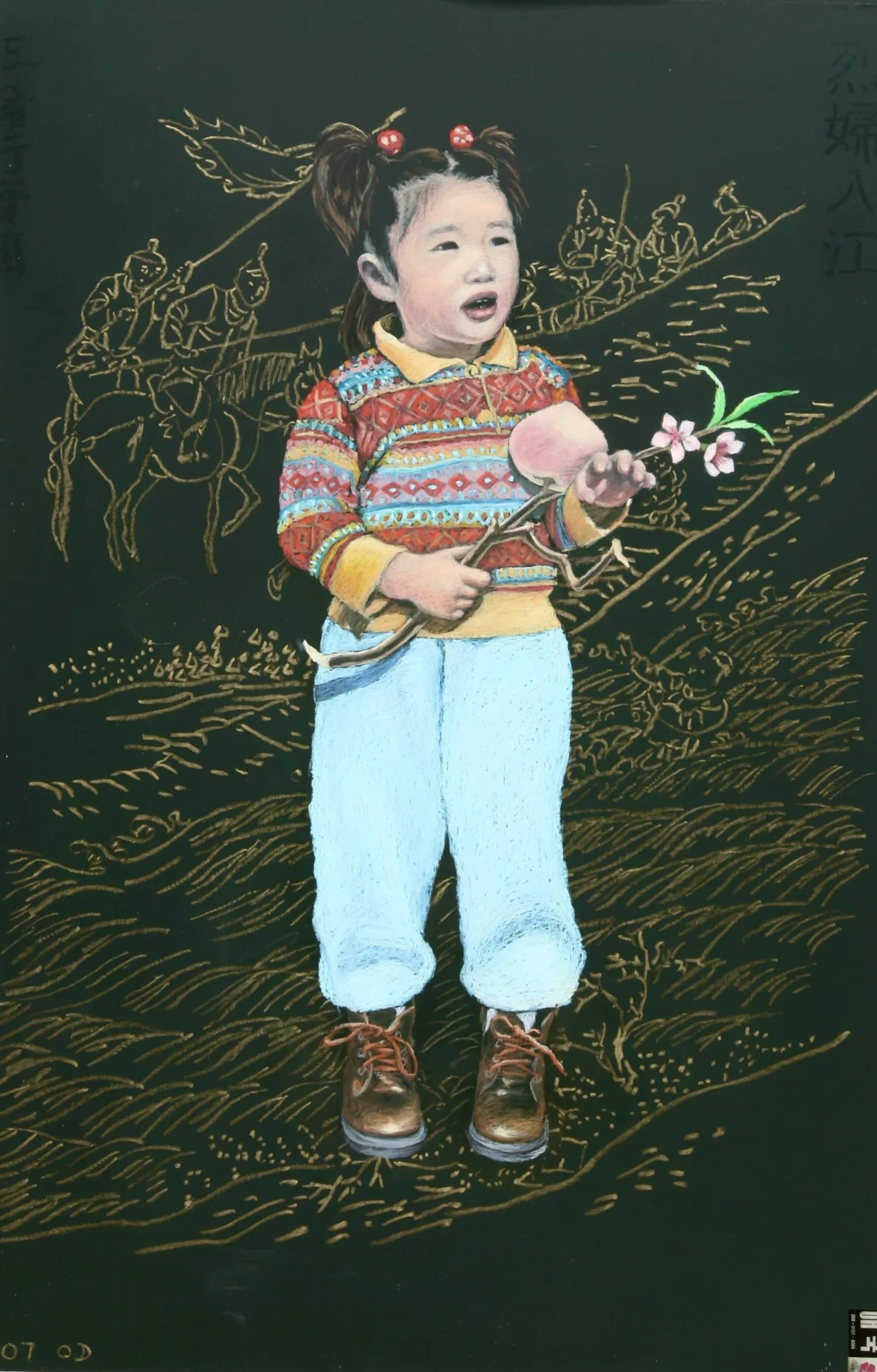
Myong Hi Kim, Dongja with Peach, 2007, Oil pastel on chalkboard, 90 x 60 inches
Woong Kim (b. 1944)
Based in New York since 1970, Woong Kim has cultivated a painting practice guided by personal intuition rather than external trends. For Kim, painting serves as a conduit between interior life and the physical world.
Working with oil paint, pencil, and natural pigments, he builds surfaces through repeated layering, masking, and overpainting on canvas and paper. These accumulations are sedimented records of experience, where shifts in tone, density, and texture register a rhythm akin to breath.
Kim’s childhood in the rural landscapes of Korea instilled values of clarity and diligence, which continue to inform the restrained textures of his work. After moving to New York in 1970, he was mentored by the pioneering Korean painter Kim Whanki and later studied at Yale. Within the context of American Minimalism, he encountered the work of Dorothea Rockburne and Ad Reinhardt, whose explorations of reduction, structure, and tonal nuance shaped his understanding of abstraction as a temporal field defined by duration and repetition.
From the 1980s onward, Kim expanded beyond strict reduction, developing denser accumulations of form, layered color fields, and increasingly tactile surfaces. His works hover between landscape and abstraction, where irregular geometries suggest terrain, erosion, or geological stratification without resolving into representation. Despite this ambiguity, the paintings maintain a controlled internal logic shaped through continual revision.
In recent decades, Kim has maintained a rigorous practice of painting and revision in relative isolation, sustaining a slow, methodical process of construction. Through this process, his work gives form to inner experience, inviting viewers into a state of prolonged contemplation and stillness.
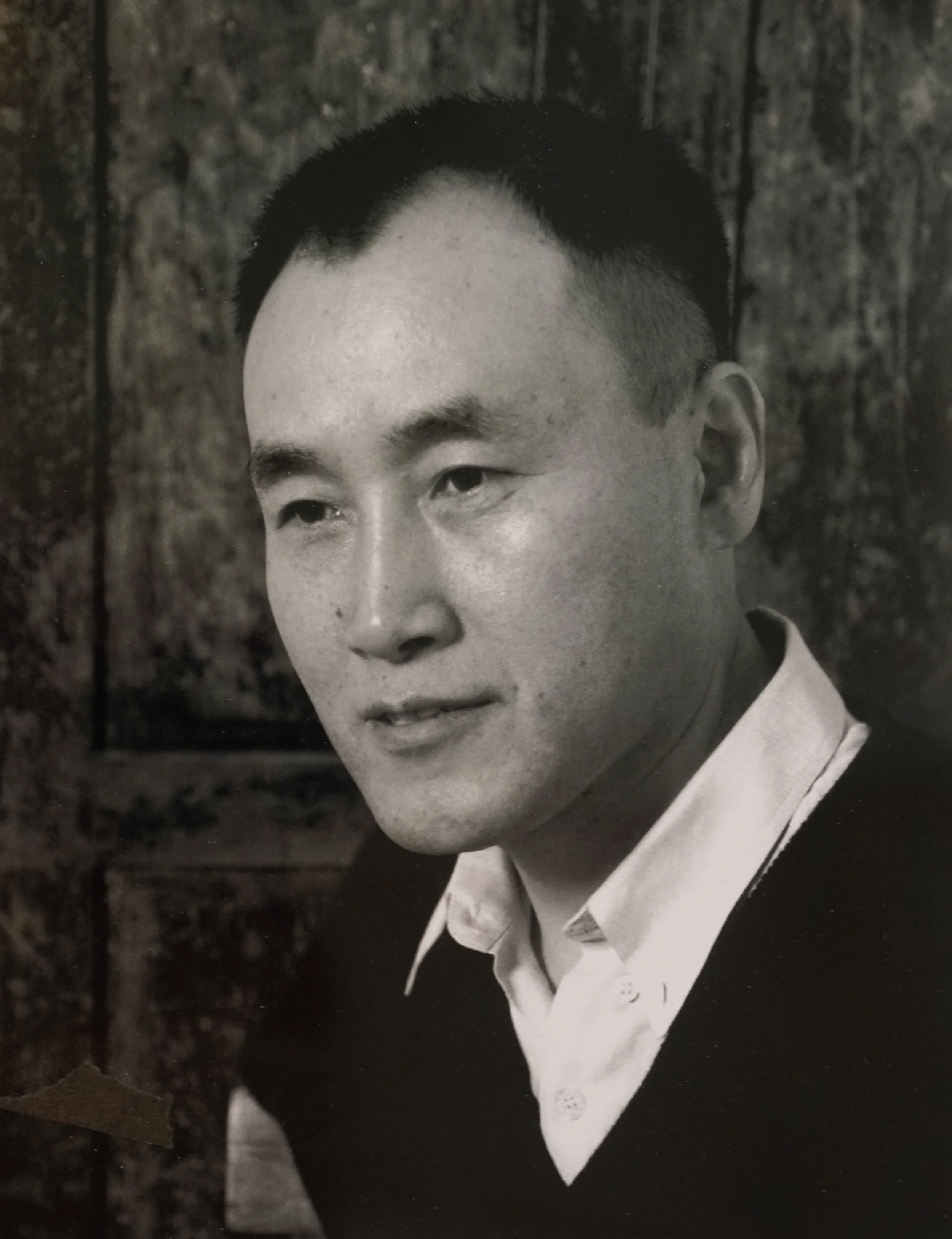
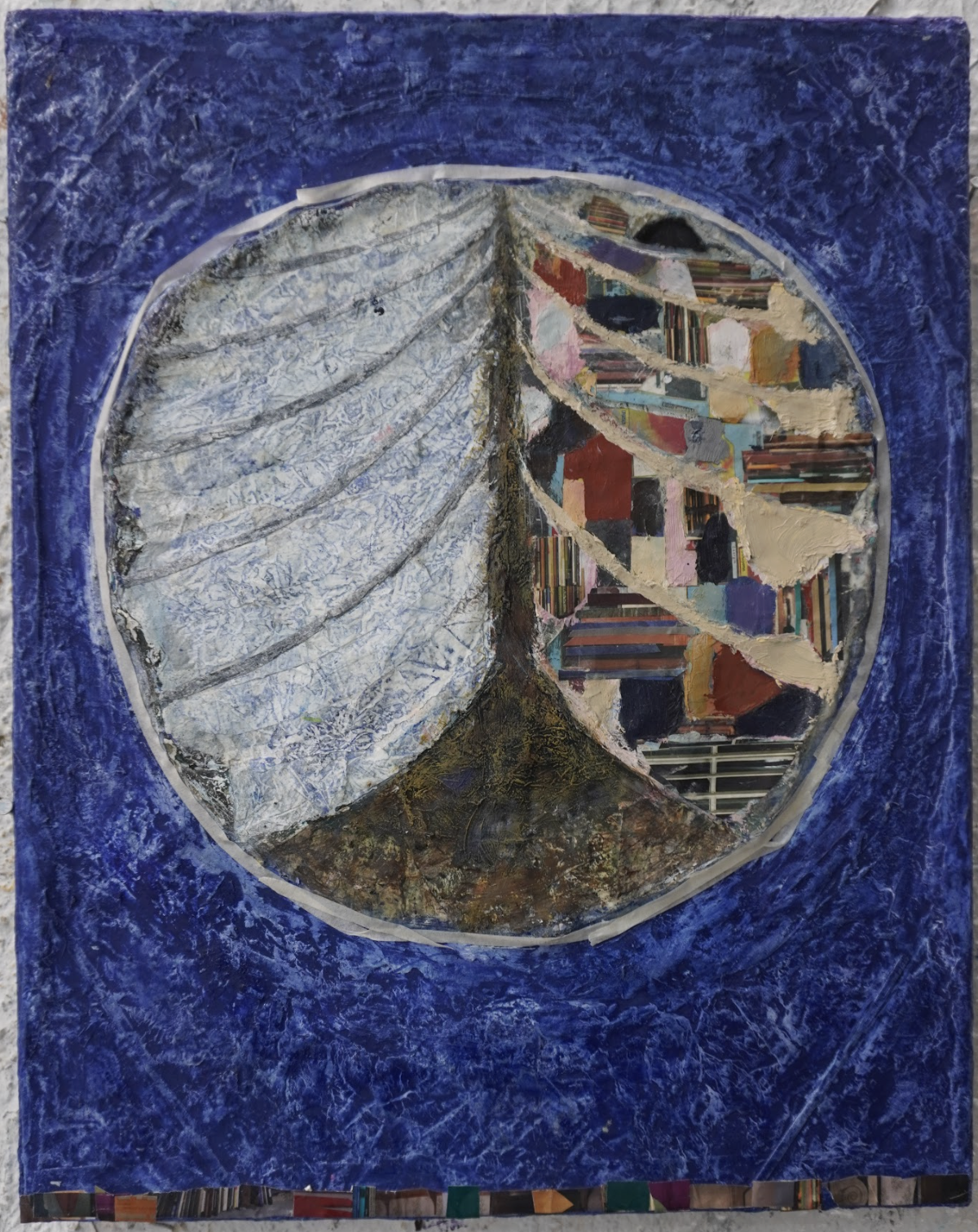
Woong Kim, Untitled, 2026, Oil and mixed media on canvas, 20 x 16 inches
Choong Sup Lim (b. 1941)
Born in the farming town of Jincheon, Korea in 1941 and based in New York since 1973, Choong Sup Lim has developed a multidisciplinary practice spanning drawing, painting, sculpture, and installation. His work emerges from sustained attention to process, where making becomes a way of thinking through perception, memory, and material change.
At the core of Lim’s practice is an iterative approach to construction and transformation. Works are built through accumulative gestures including marking, layering, erasing, binding, and reconfiguring, where no element is fixed in advance. Rather than beginning with a resolved image, he allows form to develop through ongoing negotiation between material behavior and intuitive decision-making.
Lim’s visual language brings together calligraphic marks, found materials, painterly surfaces, and sculptural interventions. These components are not organized into a stable hierarchy but instead remain in shifting relation, activated by proximity, tension, and spatial arrangement. Across media, he treats surface as a site of continuous becoming rather than resolution.
Memory operates less as narrative than as residue embedded in process. Experiences from rural life in Jincheon, including seasonal rhythms, labor, sound, and loss, surface indirectly through repetition, fragmentation, and material association. Time in his work is layered and non-linear, with earlier states often persisting beneath or within later interventions.
Informed by Confucian, Taoist, and Buddhist thought, Lim’s practice engages ideas of impermanence, interdependence, and perceptual instability. Rather than depicting nature, he works through processes that mirror its unfolding, shaping works that function as open systems of relation, where meaning remains provisional and continuously in formation.
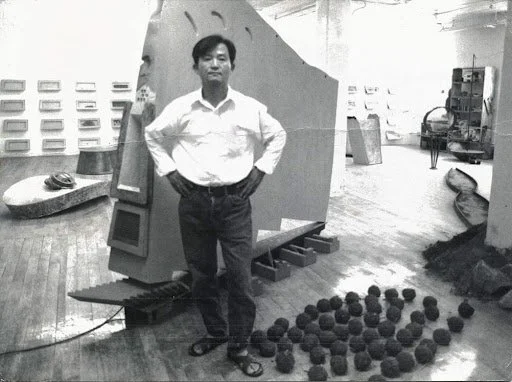
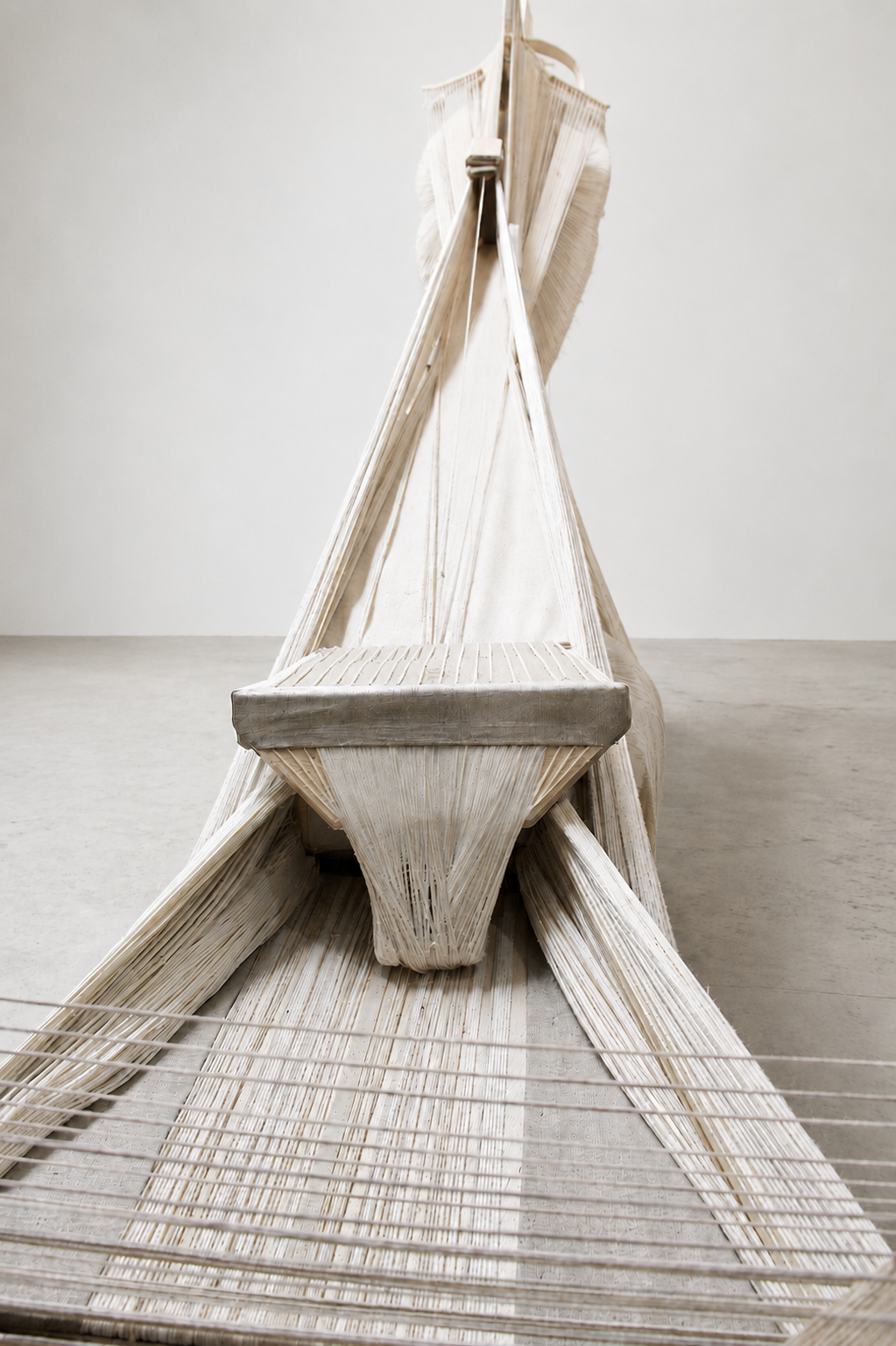
Choong Sup Lim, Gil-ssam, 2000-2006, Natural Korean cotton threads, wood, oil paint, acrylic, and U.V.L.S. gel, 30 x 200 inches